
Thames Valley Air Ambulance highlight the need for accurate CPR on television
This Restart a Heart Day, Thames Valley Air Ambulance is encouraging people to learn CPR and understand the simple steps that could help save a life.
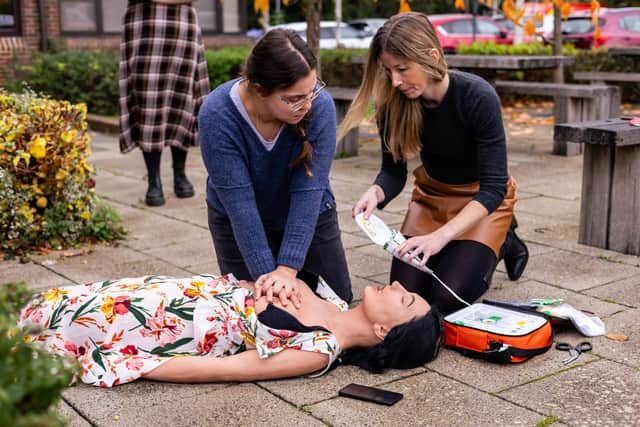

Television can be a powerful public health tool. CPR shown on screen helps normalise bystander intervention and can increase the public’s confidence to act. But accuracy matters.
Getting CPR right on screen is particularly important for women, who already face barriers to receiving lifesaving treatment in an emergency.
Earlier this year, Thames Valley Air Ambulance revealed that women are less likely than men to receive bystander CPR, with one in three female cardiac arrest patients receiving no CPR before emergency crews arrive.
One reason for this disparity is that bystanders are often reluctant to expose or touch a woman’s chest during an emergency. However, for effective compressions, and the application of defibrillator pads, during a cardiac arrest, the chest needs to be fully exposed.
In a scene from Casualty’s 40th Anniversary episode last month, CPR was portrayed in a way that did not reflect current best practice. While dramatic storytelling is understandably a priority, millions of people watch these programmes every week and may look to them, consciously or not, for cues on how to respond in a real-life emergency.
The scene shows a qualified paramedic performing CPR on a female Helicopter Emergency Medical Service worker. However, throughout the process, the paramedic fails to remove the patient’s thick, heavy clothing, which, in a real-life situation, would seriously limit the ability to perform effective CPR.
When someone suffers a cardiac arrest, immediate CPR can make the difference between life and death. That's why it's so important that lifesaving interventions are depicted accurately. Television has a unique opportunity not only to entertain audiences, but also to reinforce simple messages that could help save lives.
Mark Hodkinson, Consultant Paramedic and Assistant Director of Operations at Thames Valley Air Ambulance:
“We acknowledge the impact that dramatic storytelling can have in fictional programmes. However, the importance of early bystander chest compressions is key to improving survival from out-of-hospital cardiac arrest. To give patients the best possible chance of survival, chest compressions are best carried out on bare skin.
“You may think it feels awkward or unnecessary to cut clothes off, but it could mean the difference between life and death. That's why we will always advocate removing all clothing, including bras, to expose the chest fully to perform CPR and apply defibrillator pads.”
Thames Valley Air Ambulance runs regular CPR workshops across the region. To learn these lifesaving skills at a workshop near you, visit tvairambulance.org.uk/cpr-awareness/