
Buckingham Elm Tree on historic site to be cut back despite town council objections
Elm tree to be cut back - despite opposition from Buckingham Town Council
An elm tree on a historic Buckingham site is set to be cut back despite objections from the town council.
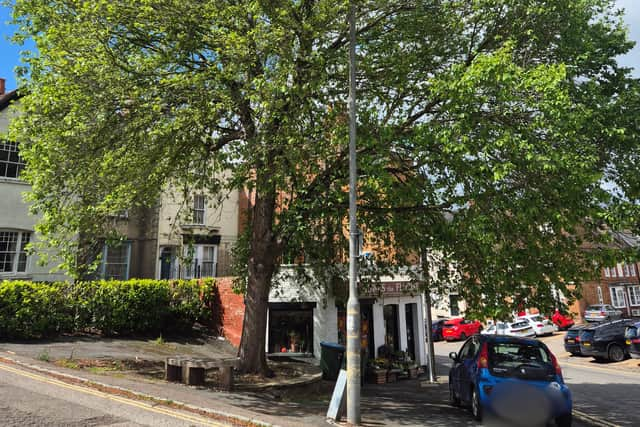

Buckingham Town Council members expressed their disappointment and concern that Buckinghamshire Council had approved the application to lift the crown of an elm tree situated within the Buckingham Conservation Area at the junction of Elm Street and Castle Street. The order allows for branches below 4m from the ground to be removed.
The town council had previously objected to this work on the grounds that 4m was too much, and that, in any case, the contractor must be mindful of the nesting season.
The tree is surrounded by stonework which commemorates an elm tree on this site as early as 1574, and a bench, both of which the town council considers to be important to the street scene. A Tree Preservation Order (TPO) was requested to provide better future protection but was refused.
Cllr Jane Mordue, chair of the town council's planning committee, said: ‘Elms are known for their majestic, cathedral-like canopy and this particular tree is a focal point in the street scene, occupying a historic position leading up to the former castle and now the parish church. These two factors led the council to express strong concern over the planned proposals.
"Whilst crowning is a normal process the extent proposed is disproportionate and we urge Buckinghamshire Council to maintain the correct ratio, keeping two thirds of the tree’s volume at least.’
Peter Strachan, Buckinghamshire Council cabinet member for planning said: “This tree is on the corner of a junction and has become overgrown, covering a street light and growing towards nearby buildings. It will therefore be cut back to stop it encroaching on the local vicinity which also includes a parking area and the pavement.
“The proposed works have been assessed by an arboriculturist who has confirmed they are not excessive and will not have any detrimental impact on the health of the tree or the appearance of the conservation area.”