
£265k flood resilience projects announced to support north Buckinghamshire households
Bucks Council announced it received Government funding to support flood resilience projects in the north of the county.
Additional funding of £265,000 from the Environment Agency will be used on research work directly linked to flood resilience projects the council already runs.
Areas of northern Buckinghamshire have proved to be vulnerable to flooding in the past with Buckingham residents being forced to deal with water damage caused by storms last autumn and winter.
Bucks Council has revealed that the new funding will specifically go towards two flood management feasibility studies and a natural flood management project running until 2027/28. A council spokesperson said: “These projects will complement the £10.5m already allocated to the council’s flood capital programme and will aim to manage surface water before it reaches the county's towns and villages.”
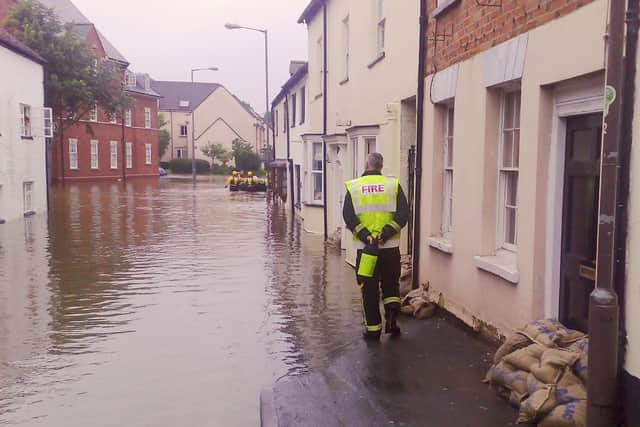

One of the projects will explore the viability of existing measures in place designed to protect homes and other properties which have suffered from frequent internal flooding in recent years, the council revealed.
Other projects will focus on natural landscapes and how they can be managed to help reduce the speed and peak of surface water flows within a catchment, before they arrive in our towns and villages. This scheme will involve parish councils along the River Great Ouse upstream of Milton Keynes.
Larger flood prevention plans involve introducing tree-hinging dams and leaky woody dams in partnership with Milton Keynes City Council, Bucks Council adds.
Councillor Carl Jackson said: “This new funding from the Environment Agency will enhance Buckinghamshire Council’s ongoing efforts to protect local homes, businesses and infrastructure from flooding, as well as providing opportunities to enhance our natural environment for the long term.”
Bucks Council advises that its flood management schemes can be viewed in greater detail on its website here. A spokesperson said: “These [schemes] will help reduce flood risk to the new East West Rail line, while also restoring natural landscapes lost to recent human activities.”
Last year the authority warned that flooding in the county could become ‘more common’ due to climate change and drastically higher levels of rainfall which has affected the region in recent years.