
MPs call for Bucks Council to drop 'infuriating' comments policy
MPs and councillors are renewing calls for Buckinghamshire Council to revisit its controversial decision to stop publishing public comments on planning applications.
The council made the decision in March, last year, following a data breach, meaning that residents’ opinions on everything from loft conversions to large housing developments are no longer publicly visible on its planning portal.
People can still have their say on planning applications, but their views are not uploaded to the portal where they can be viewed by others.
Buckinghamshire Council is one of only a few authorities to restrict access in this way, with many neighbouring councils such as South Oxfordshire and Slough continuing to publish planning comments. Conservative MP for Mid-Buckinghamshire Greg Smith called the move “extraordinarily infuriating”.
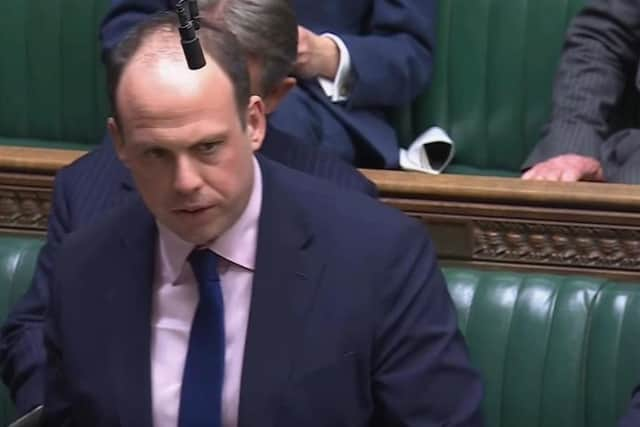

He said: “My top priority is protecting the Buckinghamshire countryside from development, so as Mid Buckinghamshire MP I find myself objecting regularly to development proposals from housebuilders and energy projects who seek to trash our countryside.
“It is therefore extraordinarily infuriating to find that fellow objectors’ comments are hidden from view on the planning portal.
“I want everyone to be able to see the strength of feeling against these inappropriate proposals and have made it clear to the council my frustration.”
Jonathan Waters, Liberal Democrat councillor for Penn, Tylers Green and Loudwater, said the council should reverse what he called a “retrograde step”.
Cllr Waters, vice-chairman of the East and South Buckinghamshire Area Planning Committee, said: “Public consultation should be seen as a highly valued part of the process ensuring that it is open and transparent to all, what this change has done by hiding public comments gives a negative, secretive, and underhand impression our residents.
“This is totally unacceptable and should be reversed immediately. If comments cannot be seen the public don’t know if the very valid points they may wish to make have been made already or not.
“This can lead to valid local knowledge and opinion on detailed planning points being missed leading to a faulty decision process. It should not be the council’s role to stand in the way of openness but be a bastion for its defence.”
He said that, with the huge amount of development being imposed on Buckinghamshire, the council and the planning authority needed to maintain trust in their processes, and that public consultation was a cornerstone of the system which must remain visible to all.
Cllr Waters added: “As a councillor that has been on planning committees for a number of years any question that the public may have lost faith in a process that has been hidden from them, leads to poor decision making and our roles much harder.”
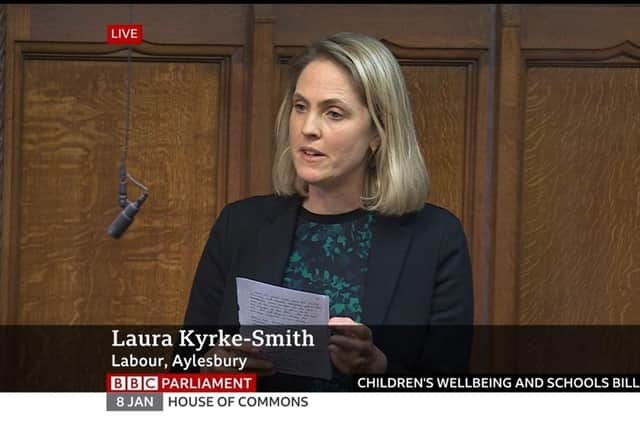
Laura Kyrke-Smith, Labour MP for Aylesbury, had formally written to the council requesting clarity on the policy and raising concerns about its impact on transparency and public confidence.
In response, Peter Strachan, Buckinghamshire Council’s cabinet member for planning, said the council had no intention of reversing its decision.
He said: “Buckinghamshire Council made the decision last year to no longer publish comments from individuals on the council’s planning page in order to comply with the law.
“We have a legal duty to protect the personal information of individuals under GDPR rules. Our decision has no bearing on the public’s ability to be able to comment on planning applications.
“Although comments are not publicly visible, the planning assessment process has not changed and decision makers, including planning committee members, still have full access to all comments.
“All views given are fully considered when determining an application, as has always been the case. These representations play a valuable role in bringing local issues to the council’s attention and will always do so.”
Adding that all views given were fully considered when determining an application, as had always been the case, and that such representations played a valuable role in bringing local issues to the council’s attention and would continue to do so.