
Hundreds of Buckinghamshire households miss out under new council tax reduction proposals
Council tax relief for thousands of households in Buckinghamshire is set to be overhauled under new council proposals.
Buckinghamshire Council is considering introducing a banded council tax reduction (CTR) scheme from April 2026, replacing the current income-based system for working-age residents. Pension-age households would continue to be supported under a nationally set scheme.
The current scheme supports almost 14,000 working-age households, with the council forgoing around £19.7 million in council tax income each year.
Under the proposals, the council says a banded system would simplify how awards are calculated, reduce fluctuations when household incomes change, and significantly speed up processing times. New claims are expected to be processed in around 10 days instead of the current average of 29 days.
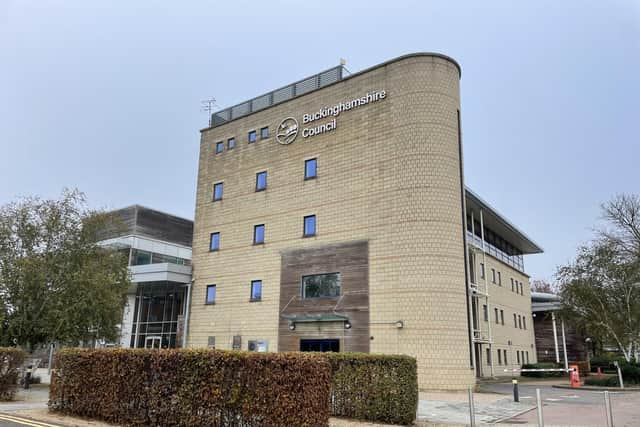

Councillor Robert Carington said the changes would provide greater certainty for claimants. He said: “People will see their awards go down [in processing time] from a 29-day period to a 10-day period, so they will receive the awards faster.
“It will reduce volatility in the support offered, so they will have consistency in the calculation of this award.” He added that this would help households better understand what they would receive and anticipate changes. However, the reforms would result in reduced support for around 3,500 households, or 25 per cent of those currently receiving council tax reduction. Of these, around 772 households would no longer qualify for support at all in the first year.
The average impact for affected households would be £538 a year, or around £10 a week, in 2026/27. By year three, the average loss would rise to £777 a year. The largest individual reduction identified in modelling was £3,661 a year for a household in a Band F property with savings above £6,000.
To ease the transition, the council is proposing a one-year transitional protection scheme for households facing larger reductions in support.
Households facing reductions of more than £10 a week would have losses capped at £12.50 a week, or £650 a year, at a cost of £800,000. Around 1,720 households are expected to receive this protection.
Councillor Isobel Darby acknowledged the reforms would create “winners and losers”.
“Nobody likes change,” she said. “But clearly we’ve got a bit of a monster here in terms of how we calculate it, how we process claims, and this new scheme will mean that we actually get the help to people that need it faster.”
The council says 75 per cent of households currently receiving council tax reduction would see their support maintained or increased, helping to reduce the risk of non-payment and arrears.
Overall, the scheme is expected to generate an additional £1.5 million in council tax income by 2028/29, with £1.2 million going to council services and the remainder to police and fire authorities.
Public consultation on the proposals will run for six weeks, from December 17 to February 2. Cabinet is due to consider the results on 10 February 2026, before making recommendations to full council later that month.