
Plans to convert Aylesbury house into children’s home approved despite anti-social behaviour fears
Plans to convert a house into a residential children’s home in Aylesbury have been approved, despite local concerns about anti-social behaviour.
The house, located in the area near Walton Street and Wendover Road in Aylesbury, will accommodate up to five children, with two adults on site 24 hours a day.
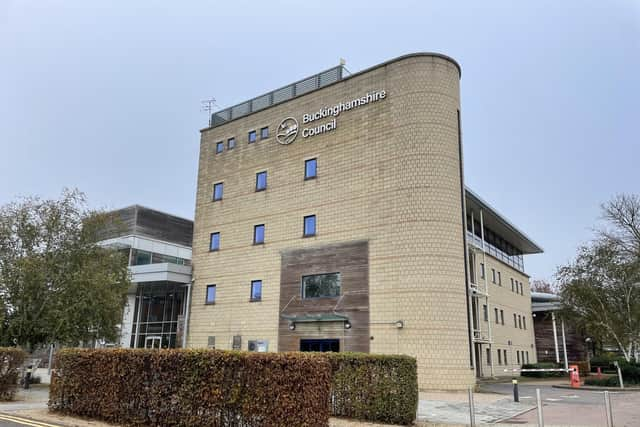
The conversion was approved by Buckinghamshire Council, even though neighbours expressed worries about possible anti-social behaviour and a potential drop in house prices.
There will be no changes to the house’s structure or exterior, and the property will continue to have two off-street parking spaces.

It said: “The proposal is for the use of the property as supported living accommodation for up to five children with full-time support needs for short, medium- or long-term placements.
“Maintenance and health and safety personnel will be present on an ad hoc basis. The proposed use will meet much needed demand for supported living accommodation for children and young people.
“The number of staff and young people at the property will mean that it will generally function in a similar way to a typical Use Class C3 dwelling with 4 bedrooms.
“All proposed internal works relate to the installation of fire safety devices. The proposed care home will provide excellent living accommodation for the occupants, and will be fully compliant with CQC and OFSTED standards.
“With only two shifts of support workers during the day, the traffic in and out of the home will be one or two vehicles arriving in the morning, leaving in the evening to be replaced by one or two vehicles coming in the evening with the total traffic no more than
“The property will not be occupied by more people than the capacity of the dwelling, and so there is no need to increase the storage capacity for waste and recycling.”
The application also addressed anti-social behaviour concerns, stating that if any incidents occur, police can log the callouts with Ofsted, which has the power to take action against the home.
It stated: “The development is in general conformity with all applicable policies as previously illustrated.
There is an identified need for additional accommodation to support children and young people in England, which this application will contribute to meeting.”
In an officer’s report, the application was recommended for approval. The report noted that although the plans would result in the loss of a private house, the building could be converted back to residential use if the home is no longer needed.
It said: “In this instance, the important social benefits of providing a well-managed environment for the care of vulnerable children can be considered as sustainable development.”