
Giant albino African land snails discovered dumped in woodland near Aylesbury
Two giant albino land snails were found abandoned in Buckinghamshire, the RSPCA confirmed.
The welfare charity announced that the snails, whose normal habitat is among tropical wetlands and forests in sub-Saharan Africa, were discovered in a vivarium which was dumped in bushes near Ingram Avenue in Aylesbury on October 20.
According to RSPCA guidance, these are considered an invasive species with a voracious appetite for plants and can do substantial damage to crops. In the UK they can be kept as indoor pets in a warm environment.
RSPCA inspector Malwina Gasiorek is investigating and said the snails are now at a specialist exotic animal centre.
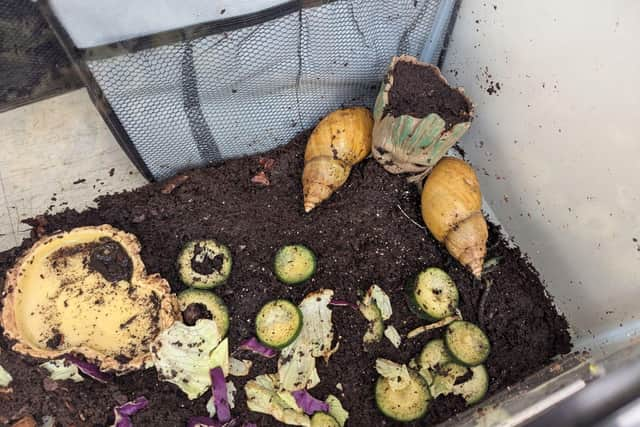

A spokesperson for the animal charity said: “Although they had been put in a Vivarium the food left was old and there was no water as the dish was upturned, they also need a humid living environment with a temperature maintained over 20C - so these snails were lucky to survive.”
They are now with a reptile specialist in Dunstable, who is looking after them until a suitable owner can be found.
The spokesperson added: “Giant African land snails include the largest land snail species known (Achatina achatina) and can often grow to shell sizes of 18 cms by 9 cms, while some snails have been known to grow to 30 cms by 15 cms. These snails were about 20cms by 6cms.”
The RSPCA urges potential owners to do plenty of research before committing to owning an exotic animal and offers further guidance on its website here.
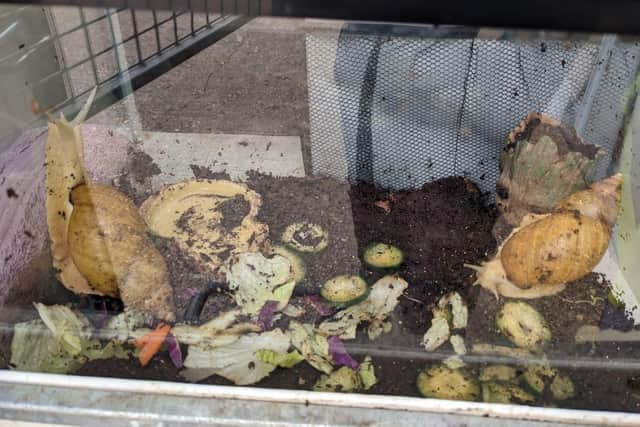
Inspector Gasiorek said: “This was quite an unusual find - but it is lucky they were discovered when they were as they would not have survived much longer.
“It is sad to think that these were once cared for pets - who were simply left dumped and left in a very vulnerable position.As with all pets, it’s really important that anyone thinking of taking on a giant snail is aware of what is involved in taking care of them and do their research first.
“Giant African land snails are hermaphrodites with both male and female reproductive organs and so their propensity to multiply can be problematic even in controlled environments. They breed very easily and two snails can multiply quite quickly.
“Because they’re not native to the UK, it’s also illegal under the Wildlife and Countryside Act 1981 to release these snails, or their eggs, into the wild.”
The RSPCA says it often has to care for exotic animals after new owners discover the difficulty in looking after them or novelty wears off. In other instances, the charity says, it is often alerted to abandoned animals that have been deliberately ditched by their owners.
These cases can put the area’s wildlife at risk. The RSPCA says that the needs of reptiles can be challenging to meet because they are just the same as they would be in the wild and are fundamentally linked to certain behaviours, diets or environmental conditions that can be difficult to replicate in a domestic environment.