
Footpath closed after crayfish cause route's foundations to collapse in Chesham
Crayfish and tree roots have caused serious damage to a Chesham footpath, forcing a temporary closure while urgent repairs are carried out.
A 15-metre section of the route between Kitty’s Bridge in Waterside and the railway bridge over Moor Road has cracked and subsided, leaving it unsafe for pedestrians.
Investigations revealed that the concrete riverbank supporting the footpath had been weakened over many years.
The roots of an old elder tree and a dense bramble thicket split the bank, allowing water to leak from the channel into Moor Marsh.
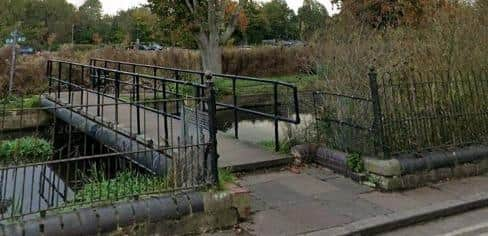

At the same time, invasive non-native signal crayfish had burrowed under the foundations, undermining the structure and causing the path to collapse.
The combined damage has caused the concrete to lean by around 25 degrees towards the river, raising concerns about longer-term stability.
With support from Buckinghamshire Council’s Rights of Way team, Chesham Town Council put in place a temporary closure and diversion at the beginning of September to allow contractors to investigate.
Their report also highlighted that the path was built to a lower standard than expected, with only a single layer of tarmac and no underlay. This has made it more vulnerable to cracking.
The council said: “There is currently no effective control method for signal crayfish, so they will continue to cause damage along the length of the concrete riverbank. There is a real risk of bank collapse and flooding.
“A holistic solution needs to be found for this entire stretch. This will be complex, expensive and will need all landowners to work together with the Environment Agency to identify a permanent solution.”
In the meantime, the council has authorised emergency works to make the path safe and reopen it to the public.
The repairs involve infilling the base with large flints, topping with type one aggregate, and resurfacing with new tarmac.
Contractors estimate the work could last between two and five years, giving time to plan for a long-term solution.
The £15,698 project was formally ratified at this month’s full council meeting. The council stressed that carrying out the work promptly avoided higher costs, as returning contractors would have added further expense.
Environmental checks were also made before work began. A trained water vole monitor surveyed the area to ensure that the nearby colony would not be disturbed, and the Environment Agency was consulted on the nature of the repairs.
The council said the repair will not only restore safe access but also support its wider objective of providing high-quality recreational facilities for residents. The improvements will also enhance accessibility along this stretch of footpath.