
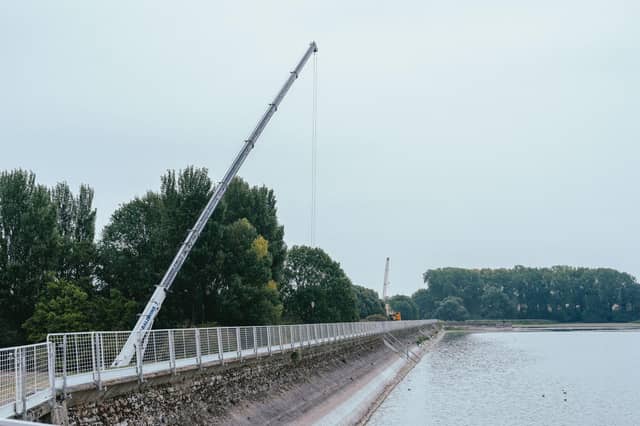

The 200-year-old Wilstone Reservoir near Tring is getting a steel “curtain wall” driven deep into its two clay embankments to create a watertight seal – with each pile measuring from 9 to 11 metres in size. So far 450 metres have been done out of 1,350 metres. A seating area is being created at one end, utilising the tops of some of the piles. The work is part of a 15-month programme required under the Reservoirs Act, aimed at future-proofing the site against leaks, droughts, and extreme weather. Startops Reservoir, at Marsworth is set to be given this protective treatment in the next two or three years, as there is a leak high up opposite Startop Farm, although this is currently controlled by managing water levels. “At Wilstone, we’re pushing in steel piles that have a Z-shaped interlock, so each clutches the next to make a watertight wall,” explains Mark Stephens, project manager for the Canal & River Trust. “They are designed to last at least 100 years and protect the embankment where there was potential for leakage, making it more resilient in future.” The Trust is using land-based equipment - including a 250-tonne crane able to lift over trees and reach down the embankment, and a hydraulic press exerting more than 100 tonnes of pressure. So, the reservoir doesn’t need to be drained and can stay full enough to continue supplying water to the canal, reducing stress on fish stocks and keeping the ecosystem intact. The works began in June and will continue until March 2026. To accommodate the project, the footpath along the top of the dam has been temporarily diverted through a nearby field, keeping access open to Mead’s Farm shop and café. The reservoir car park will close in early September for seven months, and the adjacent road will shut for four weeks with a diversion in place. The road may reopen at weekends in this time and Mead’s Farm Shop will remain accessible. Mark says the team is working hard to minimise disruption: “We’ve built a special road to support the crane so that it doesn’t damage the fields - it will be taken up once the work is complete. And we’re doing everything we can to preserve trees and habitats. Once finished, visitors will enjoy a new all-weather footpath on the embankments and improved steps.” The reservoir’s water level has naturally dropped during the dry summer months, which coincides with increased canal usage. A syphon outfall upgrade is planned for autumn, requiring slightly lower levels, but the Trust has committed to maintaining enough depth to protect wildlife. The Canal & River Trust, a charity, faces growing financial pressure as government grants decline. With climate change increasing the risk of high rainfall events, storms and droughts, public support is more important than ever. It has 74 major reservoirs in its care and Wilstone is among the largest. Built in 1802 to supply water to the Grand Junction Canal (now the Grand Union) via the Wendover Arm, it is now part of the Tring Reservoirs Nature Reserve, a Site of Special Scientific Interest (SSSI) managed by Herts & Middlesex Wildlife Trust. It’s home to mute swans, teal, wigeon, shoveler ducks, corn buntings, and even the occasional visiting seabird like the common scoter. Birdwatchers also regularly spot great crested grebes, house martins, wagtails, and cormorants. For updates, visit canalrivertrust.org.uk/wilstone-reservoir-works or call 0303 040 4040.
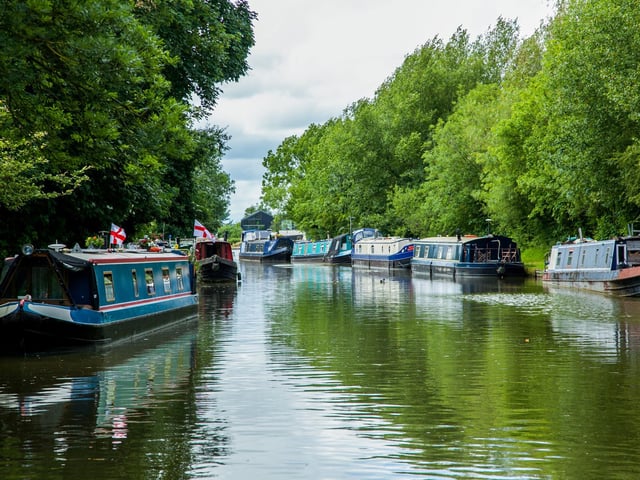
5. Grand Union Canal at Marsworth
The new structure will protect canals in the region Photo: Canal & River Trust