
Dozens of flood defences in Buckinghamshire not fit for purpose
Nearly one in five of Buckinghamshire’s flood defences are below the required condition, according to new data.
Of the 408 flood defences across the county, 73 are classified as below the required condition. The figures also show that 48 of Buckinghamshire’s 334 high-consequence flood defences — around 14 per cent — fall below the required condition.
It comes as multiple flood alerts have been issued across Buckinghamshire, including in Marlow and Bourne End. A high-consequence flood defence is one designed to protect multiple homes or businesses from flooding.
Last winter, the UK was hit by six named storms. Among them, storms Bert and Connall caused severe flooding in England during November 2024.
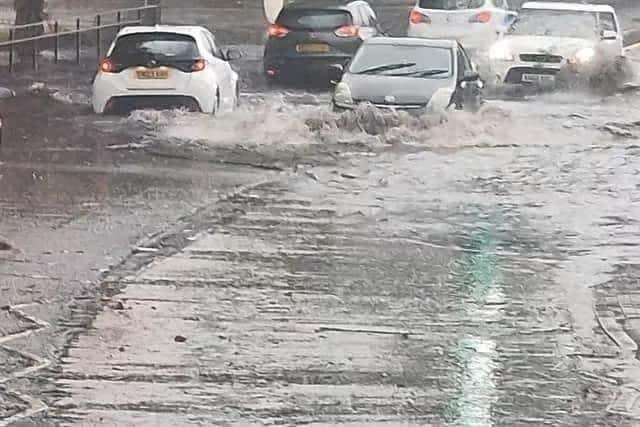

Winters are also getting wetter, according to the Met Office. Six of the 10 wettest winter half-years (October to March) for England and Wales have been in the 21st Century so far.
Dave Throup, a former Environment Agency area manager who is now a trustee and director of the Heart of England Forest, said any underperforming flood defence should be treated as a concern. “Any flood defence that is not operating as close to 100% efficiency as possible is of a concern,” he said.
Mr Throup said flood defences can fail for a number of reasons, including repeated extreme weather events. He added: “It’s difficult to say why that is happening. Is it a lack of money? Or is it the bashing that these flood defences have taken over the last three or four years as a result of many very large flood incidents? It’s very difficult to pull that apart.”
He added that some defences, particularly grass banks, are especially vulnerable as rainfall becomes more frequent and intense. “When they get huge amounts of water on them on a regular basis, you start getting erosion and faults,” he said.
Professor Hannah Cloke OBE, a professor of hydrology at the University of Reading, said the national picture was “very worrying”. She added that climate change is making floods more frequent and more severe. “We are already seeing heavier rainfall, and it’s happening faster than our climate models predicted. Our infrastructure is simply not able to cope,” she said.
Cllr Ade Osibogun, Buckinghamshire Council’s cabinet member for environment, climate change and waste, said the authority was very aware of the impact flooding can have on residents and business.
“We work hard to reduce the risk wherever possible,” he said. “As the lead local flood authority, we monitor flood risk and work closely with the Environment Agency and other partners to prioritise actions that help protect communities. We’ve recently secured £265,000 of funding to support flood risk management projects across the county, and we continue to target investment in areas most at risk.
“This includes ongoing improvements to local drainage systems, maintenance of watercourses and working with landowners to strengthen natural flood resilience.
“While some flood defences are owned and maintained by other organisations, we remain committed to doing everything we can to help reduce the likelihood and impact of flooding.”
An Environment Agency spokesperson said: “Protecting communities in England from the devastating impact of flooding is a top priority – which is more important than ever as climate change brings more extreme weather.
“Each year, we complete up to 165,000 inspections of flood assets across the country and have recently redirected £108 million into repairs and maintenance. This will help to ensure the strongest protection for nearby communities.
“If the performance of an asset is reduced, then immediate action is taken to ensure that flood risk continues to be effectively managed until the asset is fully repaired or replaced.”
Flood defences are maintained by a patchwork of organisations across England from private individuals, to water companies, charities and local authorities – but just over half of defences with a flood risk management purpose are maintained by the Environment Agency.