
Court of Appeal sides with council in sewage dispute linked to 170-home Aylesbury Vale development
A legal battle between Bucks Council and an environmental charity has ended after the authority was taken to court over concerns relating to a 170-home development in Aylesbury Vale.
The Court of Appeal dismissed the charity’s legal challenge relating to a High Court ruling which conditionally approved a controversial project in Maids Moreton.
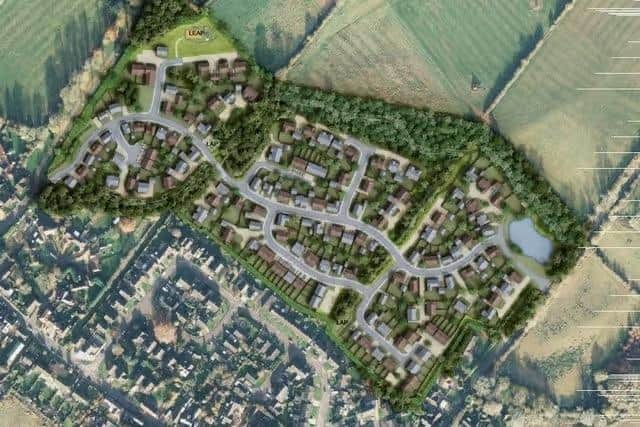
Wildfish, an independent environmental charity which supports animals of the same name, took the council and developers on the project David Wilson Homes, to court over concerns with a development by Walnut Drive and Foscote Road.
Wildfish raised the alarm regarding the potential for flooding in the area due to overspills from the River Great Ouse. It argued that the authority may have approved the scheme unlawfully without carrying out mandatory screenings.

However, both the High Court and Court of Appeal concluded that the council’s planning approach was legally correct.
Wildfish noted that a judge said the project cannot go forward without the sewage system in north Buckinghamshire being fixed.
Wildfish argued the sewage system in the Buckingham region was failing its residents and noted that it had been given a ‘poor’ rating under the Water Framework Directive environmental standards. The charity argued that the structure run by Anglian Water cannot cope with extra demands.
Prior to the approval of the scheme, Anglian Water opposed the development citing concerns over the additional water flows that an extra 170 households would bring.
Following the Court of Appeal hearing Wildfish notes that the council cannot proceed with construction until a foul water drainage scheme for the site has been approved.
The charity’s solicitor, Justin Neal, said: “This has been a long, hard fight to stand up for the principle that capacity at the sewage works must be resolved before building commences. Although we lost on the technicalities, the judgment clarified that, despite what the council and the developer thought, the stronger, original planning condition still remains intact. That means that the high-level of protection now remains and other councils will need to think twice before seeking to water down their conditions in the same way.”
Current plans regarding the new neighbourhood project state that 49 affordable homes will be constructed and the rest will be sold as private dwellings. According to the plans, the housing complex, which would be built on disused agricultural land, would be a biodiversity net gain. The new neighbourhood would include a mix of homes starting with one-bedroom properties, up to five-bedroom homes with everything in between.
Nick Measham, CEO of WildFish, said: “With small changes to the legislation, water companies could easily be forced to ensure that there is capacity provided to treat sewage from new developments and that planning permission be refused where there is not. It is clear, after the enormous amounts of time spent on an inquiry by the Commission for Water, that not enough attention has been paid to more practical and quicker solutions than the wholesale rewriting of the law, the demise of Ofwat and the slow and expensive creation of the single economic and environmental watchdog.”