
'Wycombe Hospital asbestos killed our parents now NHS must publish records'
The families of Wycombe Hospital workers ‘killed by asbestos’ are urging the NHS to publish records on the deadly material.
An investigation by the LDRS has found that asbestos is still present within the fabric of Wycombe Hospital, which was built in the 1960s before the material was banned and was still commonplace in construction.
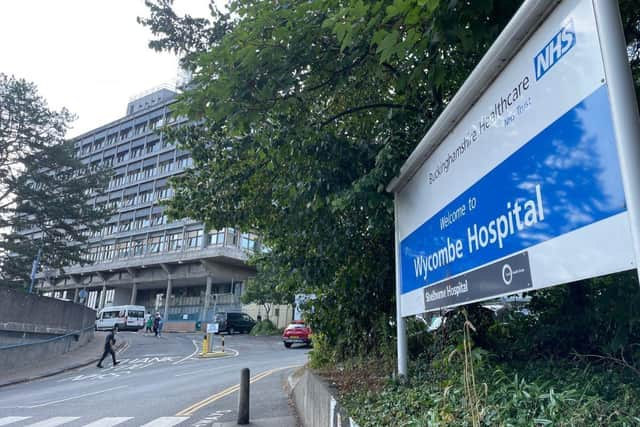

Multiple documents confirm asbestos was used in different areas of the hospital, including corridors and maintenance rooms.
Asbestos-containing materials can pose very little risk if they are intact and correctly managed, however, dangerous fibres can be released if asbestos is disturbed.

When approached about the asbestos at Wycombe Hospital, Buckinghamshire Healthcare NHS Trust told the LDRS it had ‘robust processes’ in place to manage any risk.
But historically, some people have been put at risk from asbestos while working at the ageing NHS site, and according to their families, have died as a result.
Among them is Jemima Abraham who worked at the hospital as an intensive therapy unit nurse from 1976 to 2003 and passed away in May 2019 after she was diagnosed with stage four sarcomatoid mesothelioma in July 2018.
Her daughters Sheona Ramsay-Edwards, 61, and Heather Abraham, 64, have now spoken out about their mother’s death and have demanded the trust release its asbestos register detailing how much asbestos is in the hospital, the condition of the material and where it is specifically located.
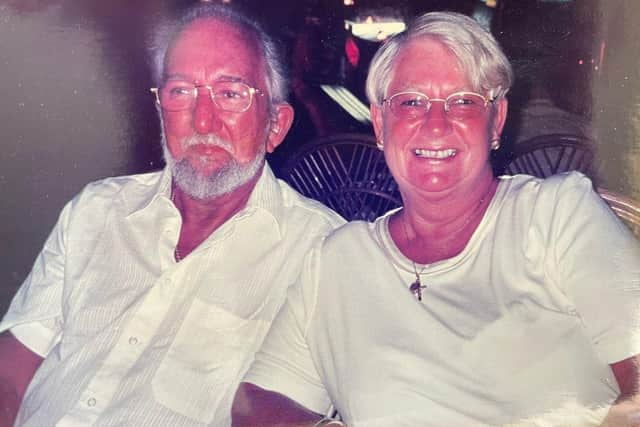
Heather, a retired senior document controller in the construction industry, said staff at the hospital ‘weren’t informed of the asbestos risk’, leading Jemima and others to come into contact with the material while working there.
She told the LDRS: “There is devastation on the person who gets the disease and devastation on their family and friends.
“Other people should be forewarned if they have been working in that hospital. Even visitors could be at risk. The whole place is riddled with it.”
Her sister Sheona, a retired electronics technician, explained how their mother endured a ‘horrendous’ death from her mesothelioma, a cancer affecting the lining of the lungs, which is nearly always related to asbestos exposure.
She said: “The type my mum had was the most aggressive and the most painful. That is a very painful death. It is not a quick death. It is weeks and months of pain.”
In 2019 the two sisters reached an out-of-court settlement with the secretary of state for health and social care which recognised the ‘loss and damage’ caused by their mother’s death, her cancer and her exposure to asbestos at the hospital.
Towards the end of her life, the mesothelioma left Jemima in intense pain if someone touched her, while she was unable to swallow or drink due to contracting thrush in her mouth.
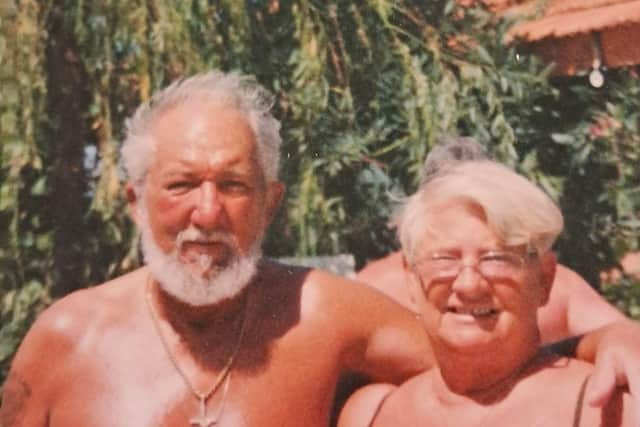
Heather and Sheona believe their late father Robert, who worked as a maintenance and autoclave engineer at the hospital, also had the disease as he showed similar symptoms to his late wife despite never being diagnosed.
Robert encountered asbestos while working in the hospital’s boiler rooms and maintenance areas, including below the main entrance, and inadvertently brought asbestos dust home on his clothes, which his wife would wash.
“Some of the holes he was having to crawl through were filled with asbestos and he would come out looking terribly white,” Sheona said.
The sisters believe they are also at risk of potential diseases due to their exposure to asbestos particles from washing their father’s clothes when their mother was busy.
Speaking about mesothelioma, Heather said: “It is, a death sentence, and it is horrible to suddenly be told you are going to die in six months’ time.”
The sisters explained their mother ‘missed out’ on several family events, including her grandson’s graduation, his 21st birthday, Sheona’s 60th and Heather’s 65th.
The LDRS requested access to the trust’s most recent asbestos surveys under the Freedom of Information Act, but it refused to publish the documents, claiming that doing so would ‘adversely affect public safety’.
However, other documents detailing the asbestos present within the hospital’s buildings have been published, including a publicly available planning statement in the trust’s 2023 application for a new energy centre at the hospital adjacent to the car park on the Marlow Hill side.
The document reads: “Ground materials present on the site represent a potential risk to end users due to the presence of significant quantities of asbestos.”
The presence of asbestos at the hospital is also confirmed by the ‘Buckinghamshire Area Health Authority High Wycombe District Asbestos Report and Register 1979’.
The report, which the LDRS has been given a copy of, was uncovered by Heather and Sheona with the help of their lawyer.
It confirms that crocidolite or ‘blue asbestos’ – considered one of the most dangerous types of asbestos – was found in small proportions in the hospital’s boiler house and oil storage room.
The document also says white and brown asbestos was found in multiple areas including pipe lagging, boiler rooms, a cloakroom, a fire exit lobby and the corridor of the maternity theatre.
The LDRS has also been given another report from 1981 titled ‘Asbestos contamination incident – Wycombe General Hospital’.
The report was written for a district engineer by a former assistant engineer at the hospital, who worked for the trust from the late 1970s until 2005, and maintained the hospital’s boiler house and electrical systems.
He had sealed the report in an envelope labelled ‘do not destroy’, which was not opened until the family found it after his death from lung cancer last year, which he was diagnosed with in 2023.
In it he says he and two workers from an external company were covered in a ‘deluge’ of asbestos dust when they opened an inspection cover in the female visitors’ toilets on the ground floor to clear a blocked drain.
The engineer said samples he sent to a forensic laboratory for tests were confirmed to be 85 per cent blue asbestos.
He goes on to say asbestos dust in the air during the incident exceeded permitted levels and that he was ‘disturbed’ that staff and their families had been put at risk by ‘inadequate information and protective equipment’.
The engineer makes several recommendations in the report, including that blue asbestos be removed as a ‘highest priority’ and that manhole covers into the boiler house be sealed and clearly identified.
The LDRS spoke to the man’s daughter who said: “Although I haven’t got any medical evidence, I do believe that dad probably died of mesothelioma.
“Am I surprised with the stories I heard growing up of how the hospital dealt with things? Not really.”
The woman, who wanted to remain anonymous, said that although her father was never diagnosed with mesothelioma, she believes he did have that type of cancer due to the contents of his report and the speed of his illness.
She said: “I think the trust needs to be open and honest about the risks that people have been subjected to.
“They need to be open and honest about when the asbestos went in and where it was, how long it’s been there and if they have done anything to try and take it out.”
The woman also spoke about the impact her father’s death had on their family.
She said: “My youngest turned round and said, ‘I thought grandad was going to see me graduate’ and that’s what really hit home.”
A spokesperson for the trust said: “The safety of our patients and staff is our number one priority.
“Wycombe Hospital was built in the 1960s at a time when asbestos was commonly used before it was fully banned in the UK in November 1999. Since this time, the approach to managing asbestos has changed considerably.
“According to the UK Health Security Agency, if existing asbestos containing materials in buildings and products are intact, they pose very little risk.
“However, if asbestos containing products are damaged in some way, fibres may be released. We have robust processes in place to ensure that any asbestos that we are aware of is appropriately managed and contained to mitigate this risk.
“For example, any known areas contaminated by asbestos can only be accessed by specialist contractors.
“Anyone concerned about historic exposure to asbestos at Wycombe Hospital should contact [email protected].”