
Opinion: Football and St Nicholas' influence in Buckinghamshire and Europe
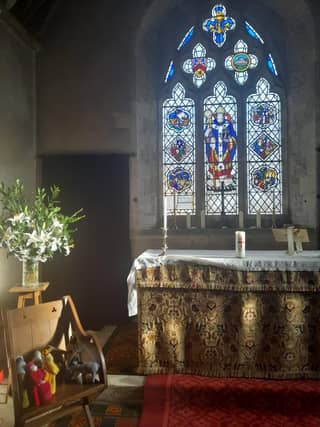

A Gift to young footballers and St Nicholas: Buckinghamshire and Europe.
On 17 December, the UK Government has recently opted to give a Christmas gift to enable the frontiers of the private and third sectors to roll-forward. By giving young British people from all backgrounds access to the Erasmus+ programme. Buckinghamshire’s footballers and other sports people (and their coaches), Buckinghamshire’s school-children and Buckinghamshire’s students (and their teachers) will get a little extra help in their first steps learning how to compete appropriately with mainland and island Europeans and to promote trade in goods, services and ideas.
There is still a great deal of pride and prejudice where the geographic continental shelf of Europe (where the island of Britain resides) is concerned.
It is then, perhaps, appropriate that this announcement came the day after the 250th anniversary of Jane Austen: the author of “Pride and Prejudice”. Even more so, if young people on the Erasmus+ scheme travelling to and from Buckinghamshire do so (like the Polish code-breakers who came to Bletchley Park) to foster cohesion and shared strength in a world where our near neighbours seem to matter more than ever; especially so, if they too are fans of Jane Austen (which, seemingly, they increasingly are) and dancing as well as football.
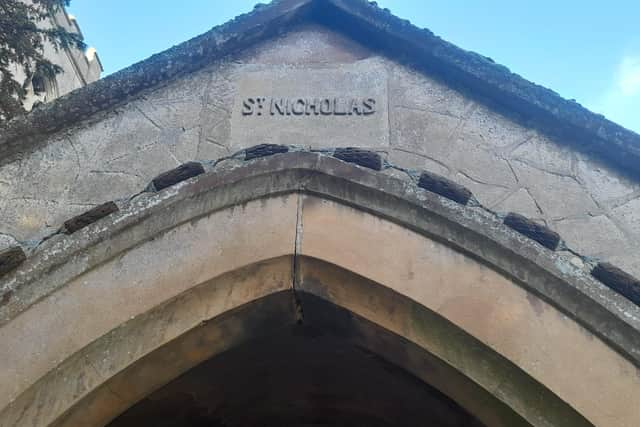
Meanwhile, another reminder of gift-giving people travelling around Europe (which, ultimately, is nearer and cheaper to travel to/from than most other places!) is both “hidden in plain sight” and super-relevant this month in Buckinghamshire.
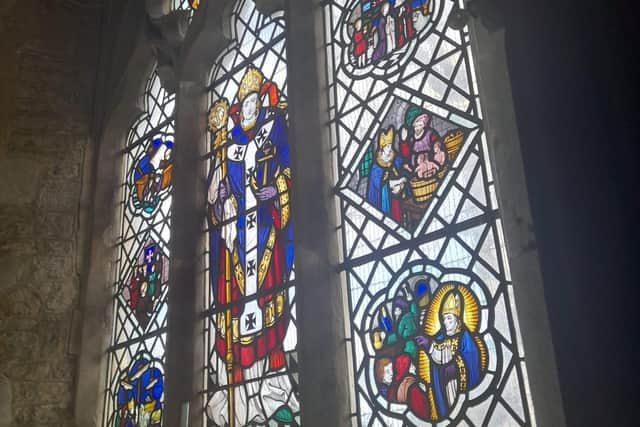
St Nicholas has many churches dedicated to him in Buckinghamshire; not least the circa-1200AD-begun Church of St Nicholas in Little Horwood.However, what is “hidden in plain sight” for some is that Nicholas was a red “suited” 4th century Catholic Bishop in modern-day Turkey before he was a saint who lived a life influential enough to inspire those churches in Buckinghamshire to be dedicated to his name.
To others, it is “hidden in plain sight” that all that happened centuries before a sixteenth-century state-sponsored revolution across parts of Europe and England that saw saints’ images (including those of St Nicholas) smashed, plastered over or re-branded: much as some original Christian images have (more recently) been covered at the AD537-built Church of St Sophia (Hagia Sophia) in Istanbul (once-was Constantinople).
Unusually, the spirit of St Nicholas’ December gift-giving survived the Reformation. Later, it then survived the same English Civil War (and Oliver Cromwell’s Commonwealth) that left bullets/gunshot in some church doors in Buckinghamshire and briefly saw Christmas and related singing even more illegal than it was under Boris’ recent lockdown.
However, ironically, that survival of the spirit of St Nicholas in Protestant north-western Europe also saw that spirit rebranded. In England, the rebrand was into the green-wearing Father Christmas (a spirit with a somewhat ironic passing resemblance to a more “pagan” Bacchanalian/Dionysian character) that some see as the first origin of Santa Claus.
Whilst there may always be some debate about St Nicholas being inspired by the gift-giving of the visiting three wise men from the east twelve days after the birth of Christ (at Epiphany), what is certain is that St Nicholas was the patron saint of sailors. In exchange for the Libral-standard currency of the Roman Empire (the crossed "L" of £), sailors from the ports of Turkey (including Myra where Nicholas was Bishop) may well have exported cinnamon, raisins, currants, nutmeg, almonds, furs and other Christmas goods to English ports and then on to Buckinghamshire in time for December arrivals by wagon.
If so, after the necessary Advent fasting (rationing?) of St Martins, no wonder St Nicholas (patron saint of sailors) was held in high regard by the faithful during the coldest darkest days: not as a replacement for little baby Jesus; but as a practical enabler to allow England’s Christian population to celebrate little baby Jesus’ birth at 00:00 hours of the first day of the first month of the first year Anno Domini. A contested and yet, globally certain, date: mid-way between the Western Roman Empire’s Christ Mass on 25 December and the Eastern Roman Empire’s Christ Mass on 7 January?
So, whilst not dwelling on how easy it was for the early young Christians and Romans to move about on the European continental shelf back before the Reformation, on the letters of St Paul held in Ireland, on calendars or on the rest, suffice to write the gift (equity investment?) of the Erasmus+ scheme gives young people aspiring to greater things a chance to learn to engage with a wider world at a lower cost: whether as a footballer or an athlete or (like Sir David Beckham) even something more… saintly!