
Director defends battery storage plant plans labelled 'inappropriate' by Mid Buckinghamshire MP
The director of the company behind plans for a battery storage facility at Mop End Farm has defended the scheme following criticism from councillors and an MP.
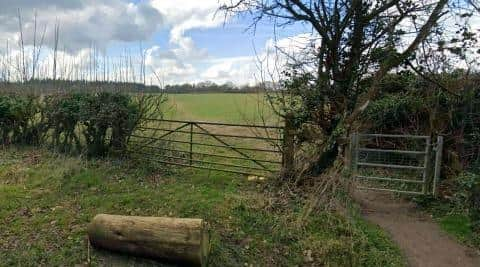
Sandbrook Capital BES Ltd has applied to build the facility on farmland off Mop End Lane, near Holmer Green.
The proposal would include 84 battery containers up to 2.39m high, 42 inverters and transformers, a private substation, and welfare and control rooms, surrounded by security fencing.
But the scheme has come under fire. Mid Buckinghamshire MP Greg Smith, in a letter to the council, said the plans would be inappropriate in the green belt.


He described the scheme as “industrial in style,” raising concerns about farmland loss, light pollution, and fire risks.
“I would urge Buckinghamshire Council to reject this application and to protect our remaining rural agricultural land for food security and the national landscape,” Mr Smith said.
Councillors Peter Martin and Heather Wallace have also called in the application, ensuring it will be debated by Buckinghamshire Council’s planning committee.
Cllr Martin said: “This is a serious application for the community in Little Missenden and beyond. The impact during construction and the details needs full discussion at Committee.”
But in a statement, Sandbrook Capital director Paul Sawbridge said the project is compact, policy-compliant and environmentally positive.
Mr Sawbridge said: “This project is about temporary, reversible infrastructure that delivers permanent benefits—cleaner air, lower bills, improved biodiversity, and greater security of supply.
“A 400 MWh facility can balance and store enough clean electricity to power around 83,000 homes per year, while avoiding roughly 29,000 tonnes of CO₂ annually.
“At a time when households pay more due to wasted curtailment on the grid, facilities like this cut both costs and carbon.
He also highlighted plans to create the Mop End Ecological Reserve, promising a biodiversity uplift of more than 800 per cent secured for 40 years. “Transforming previously farmed land into a managed ecological resource,” he said.
Mr Sawbridge added that the batteries would sit on about five acres of Grade 3b land, which is not classed as “best and most versatile” farmland.
Comparing the scheme to nuclear, he argued: “A 400 MW nuclear plant would require many tens of acres, permanent concrete and cooling infrastructure, and produce waste that must be stored securely for hundreds of years.
“By contrast, our BESS occupies about five acres, has no emissions in operation, and at the end of its 40-year life can be fully removed with the land restored.”
He concluded: “This is a compact, policy-aligned, environmentally positive scheme that makes Buckinghamshire part of the solution to the UK’s energy future.”
Planning applications throughout Buckinghamshire can be identified via the Public Notice Portal website.